THE RULE
Eyes halfway
The eyes sit halfway between the top of the head and the chin. The nose and mouth follow by halving what is left.
Find each feature doodleportrait
DRAWING FACES, EXPLAINED
Almost everyone draws them higher than that.
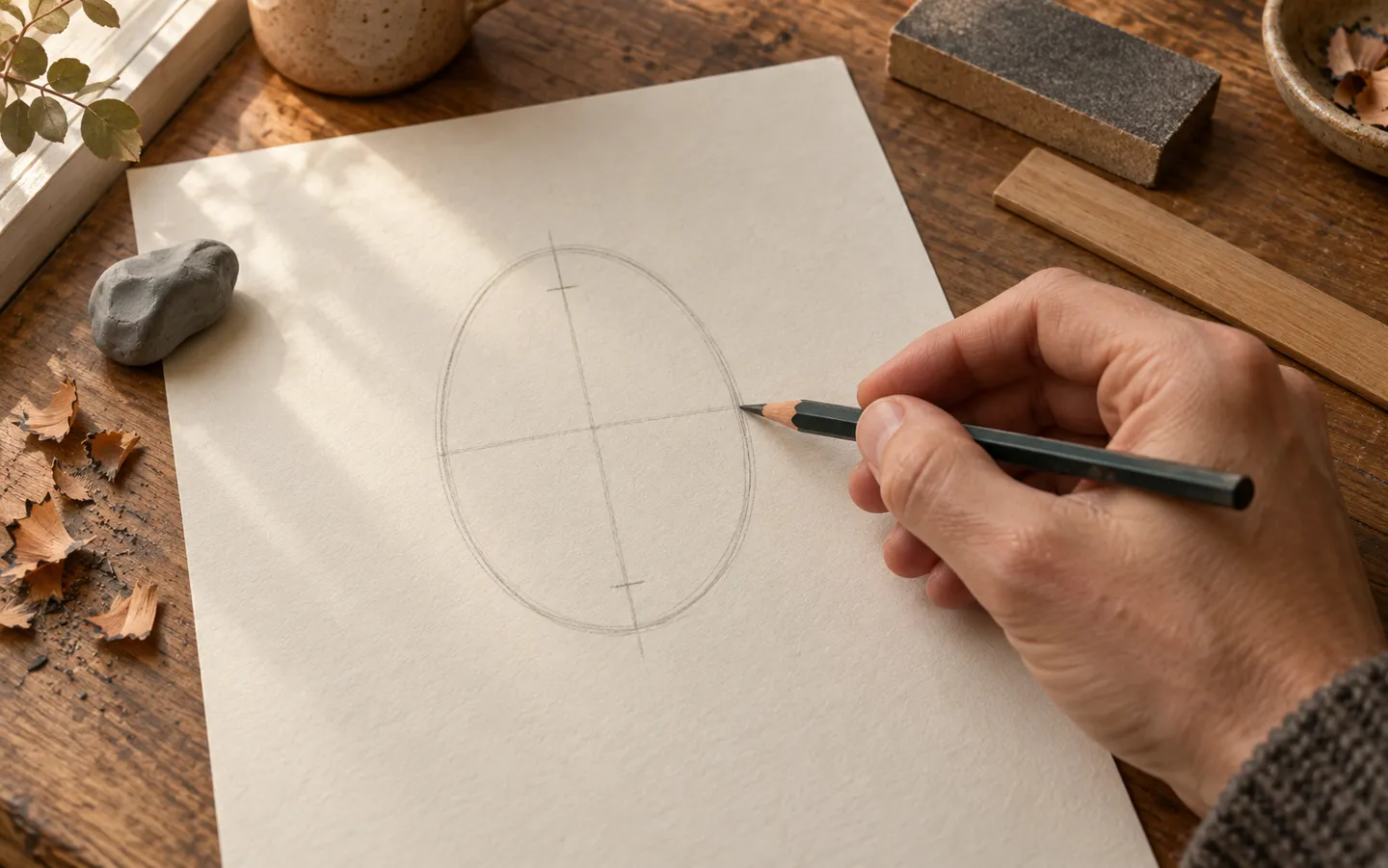
½ eyes here
Too high every time Children and adults, 124 people
A face is the thing we look at most, and one of the hardest things to draw. The reason is not your hand. It is what your brain thinks a face looks like. Here are the proportions, the research on why we get them wrong, and an old trick that sidesteps the problem.
Plain English, with the sources linked.
THE SHORT ANSWER
Three simple rules place every feature,
and one common habit pulls them out of place.
THE RULE
The eyes sit halfway between the top of the head and the chin. The nose and mouth follow by halving what is left.
Find each featureTHE HABIT
Children and adults alike place the eyes too high, and the error grows when drawing from memory.
See the researchTHE SHORTCUT
A profile cut in paper was the quick, cheap portrait of its day, and it trains you to see shape, not symbols.
A little historyFEATURE FINDER
Pick a feature to see where it goes on a face seen from the front. The bar shows how far down from the top of the head to the chin. The rules come from the University of Evansville's drawing lab.
These are averages for a head level with your eye. Real faces vary, and tilting the head moves everything, so treat them as a starting grid, not a law.
TRY IT NOW
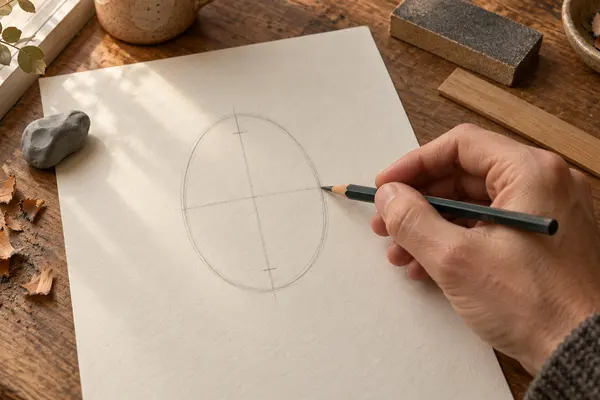
Sketch a light oval for the head, then a vertical center line and a horizontal line exactly halfway down. That is where the eyes go.
Mark the bottom of the nose halfway between the eye line and the chin, then the mouth halfway between the nose and the chin.
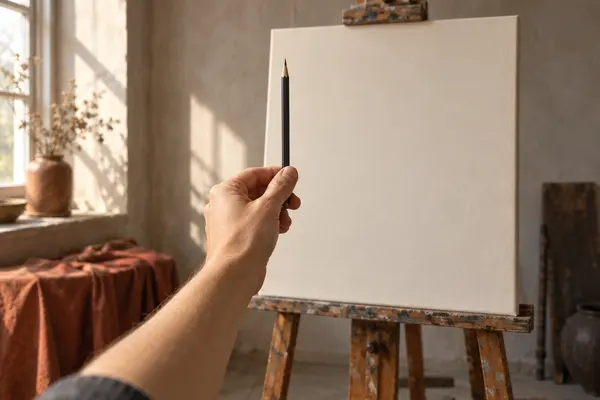
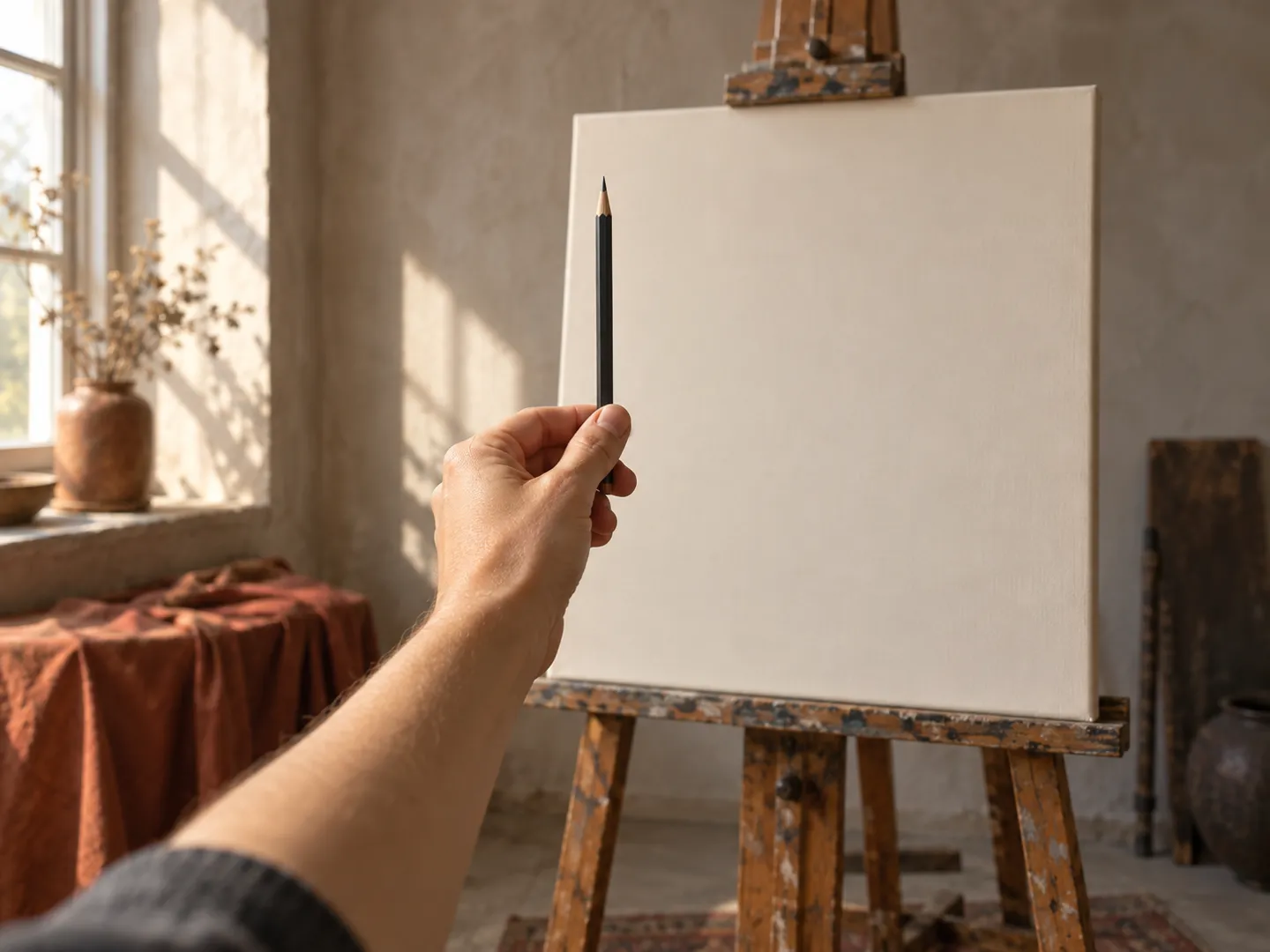
Hold a pencil at arm's length and compare distances on what you are drawing. Check the halfway line before you commit to the eyes.
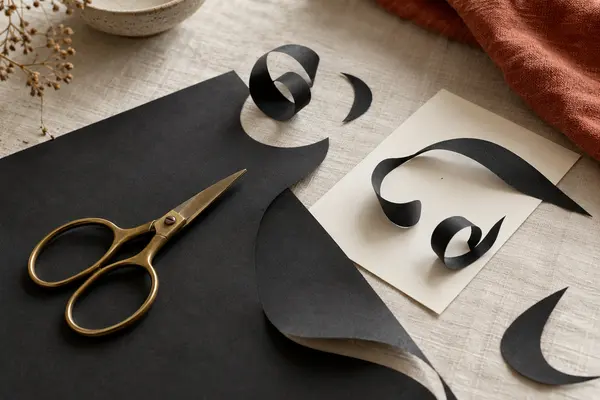
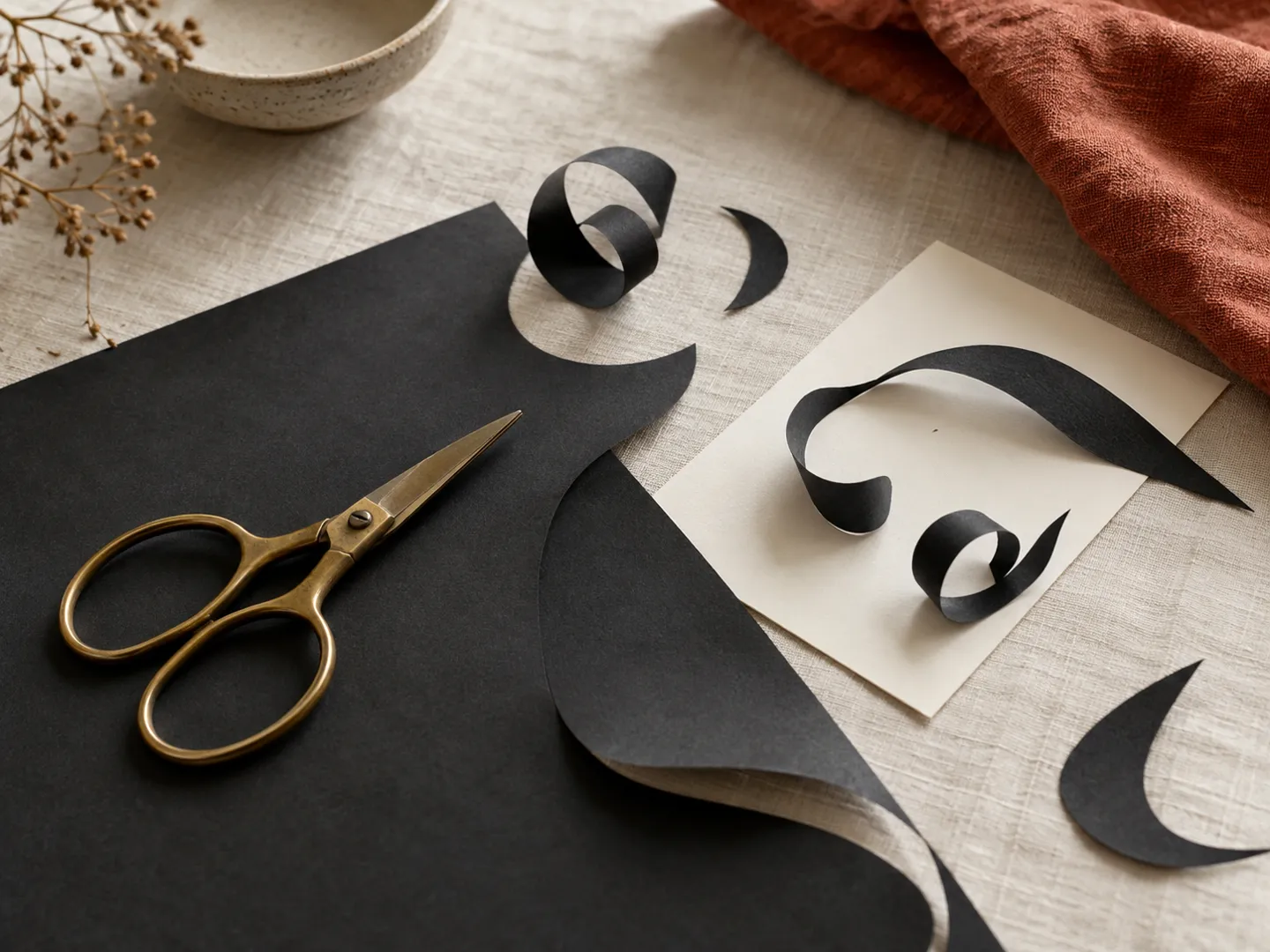
Trace a side-on shadow on paper and cut it out. Working with outline alone stops you drawing symbols for eyes and noses.
TWO STUDIES WORTH KNOWING
The mistake comes from what we expect a face
to look like, not from a lack of skill.
Too high every time
Children and adults, 124 people
People aged 3 to 5, 10 to 11 and adults rebuilt two foam faces. The average eye position was higher than on the real face in every condition, and highest for the youngest group and from memory. Mouth placement showed no such bias.
EYE PLACEMENT · 2021
About 95%
Non-artists who make the mistake
The British Psychological Society's research digest reports that about 95 percent of non-artists put the eyes too far up the head. A 2016 study with 75 undergraduates looked at why the error happens.
HOW COMMON · 2016
The fix is simple: measure the halfway line before you draw the eyes, instead of placing them where they feel right.
FACE FACTS
Eyes halfway from the top of the head to the chin; the bottom of the nose halfway from the eyes to the chin; the mouth halfway from the nose to the chin.
The top of the ear lines up with the eyebrows and the bottom lines up with the bottom of the nose. The corners of the mouth line up with the centers of the eyes.
In 1997 researchers found a region of the fusiform gyrus that responded more strongly to faces than to objects in 12 of the 15 people they scanned.
In a 2022 study, more than 3,800 US adults rated about 250 photos of faces seen in objects. They labeled them male about four times as often as female.
A tracing machine called a physiognotrace, set up in Charles Willson Peale's Philadelphia museum from 1802, produced more than 8,500 silhouettes in its first year.
QUICK QUESTIONS
Short answers to the questions people ask most.
Halfway between the top of the head and the chin. The bottom of the nose is halfway between the eyes and the chin, and the mouth is halfway between the nose and the chin.
It is one of the most common drawing errors. A 2021 study of 124 children and adults found eyes placed higher than on the real face in every condition tested, and the error was largest for the youngest children and when drawing from memory.
Research summarized by the British Psychological Society suggests about 95 percent of non-artists place the eyes too high. Learning the halfway rule and measuring, rather than guessing, is how people train it out.
A 1997 brain-imaging study found a region in the fusiform gyrus that responded much more to faces than to objects in 12 of the 15 people tested. Researchers called it the fusiform face area.
From Étienne de Silhouette, an 18th-century French finance minister known for cost-cutting. Cheap things were called à la Silhouette, and the name stuck to quick, inexpensive profile portraits.
Updated
A NAME WITH CHARACTER
doodleportrait.com is part of the DoodleSale portfolio. It isn't in an auction right now, but you can ask about leasing it.